1. Wet Weight Handling & Capacity
Q1: How much wet weight can a wet cloth drying ceiling hanger support?
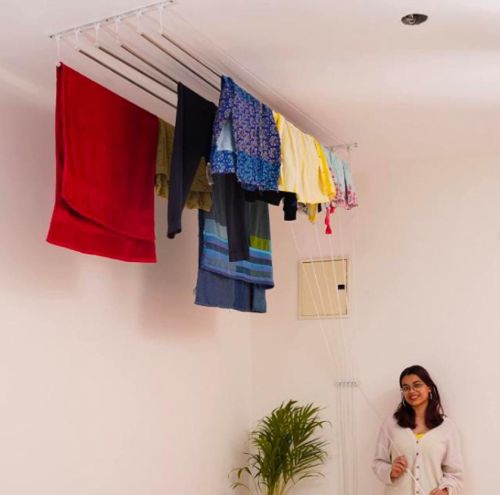
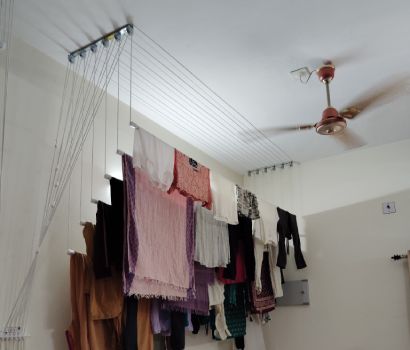
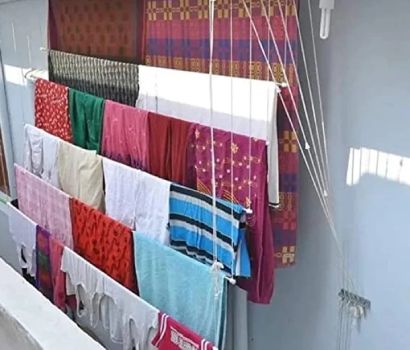
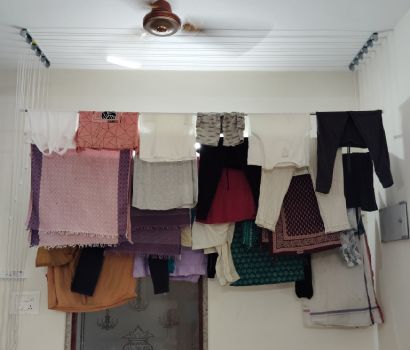
High-quality ceiling hangers designed for wet clothes can hold 30 kg to 50 kg of total wet laundry weight (roughly 6 kg to 10 kg per individual rod). This provides enough support for heavy, freshly washed items like denim jeans, thick bath towels, blankets, and woolens directly from the spin cycle.
Q2: Will hanging soaking wet clothes damage the ceiling pulley mechanism?
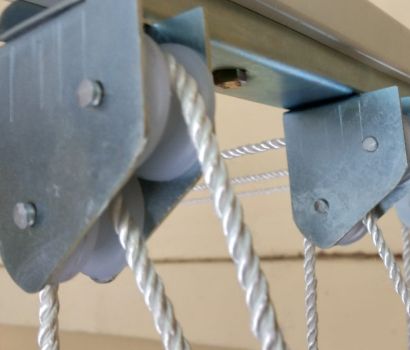
No. Heavy-duty wet cloth systems feature high-tensile steel brackets, nylon/brass pulley wheels, and multi-strand UV-stabilized ropes engineered specifically to handle high vertical tension and moisture without snapping or binding.
Q3: Can I hang heavy wet blankets and bedsheets on a single rod?
Yes. However, to prevent excessive rod bending and to speed up drying, it is recommended to drape heavy blankets across two parallel rods. This distributes the wet weight evenly and creates air space between the layers.
2. Drying Efficiency & Moisture Management
Q4: How does an overhead ceiling hanger dry wet clothes faster than a ground rack?
Warm air naturally rises toward the ceiling (thermal convection). By hoisting wet laundry up near the ceiling slab, clothes are exposed to warmer ambient temperatures and stronger cross-ventilation, drastically cutting down drying time compared to ground-level drying.
Q5: What should I do about water dripping from soaking wet clothes on a ceiling hanger?
For clothes that haven't been machine-spun, place a towel or a shallow tray on the floor directly beneath the hanger for the first 15–20 minutes of dripping. Once the excess water drains off, the elevated airflow quickly dries the remaining dampness.
Q6: Can I install a wet cloth drying ceiling hanger inside a bathroom or utility room?
Yes. They are ideal for bathrooms, indoor utility corridors, and covered balconies. Installing them over tile or stone floors makes managing drip water effortless while keeping living areas clutter-free.
3. Rust Prevention & Material Durability
Q7: Will wet clothes cause the ceiling hanger rods to rust?
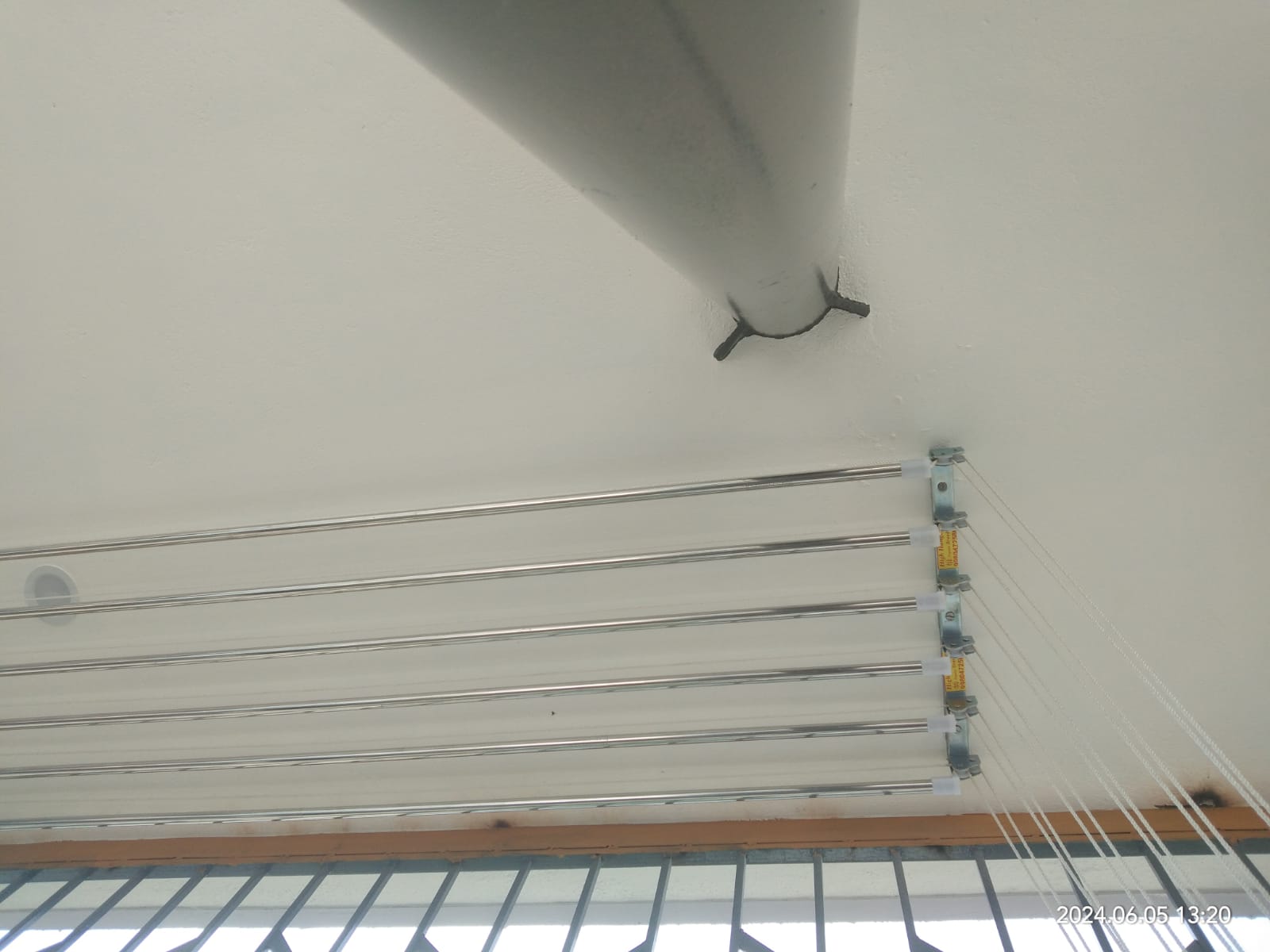
Not if you choose the right material. High-grade Jindal 304 Stainless Steel or powder-coated anodized aluminum rods are completely rust-resistant and won't stain wet white clothes with iron oxide, even with continuous exposure to damp laundry.
Q8: Are the ceiling mounting brackets rust-proof against damp air and moisture?
Yes. Quality systems use thick-gauge stainless steel or heavy powder-coated iron brackets treated with anti-rust primers to withstand humid indoor/outdoor environments.
Q9: What happens if the pulley ropes get wet continuously?
Premium wet cloth hangers use polypropylene or UV-stabilized nylon cords that do not absorb water, resist mildew growth, and maintain their tensile strength without stretching or rotting over time.
4. Installation & Space Efficiency
Q10: How does a wet cloth ceiling hanger save floor space?
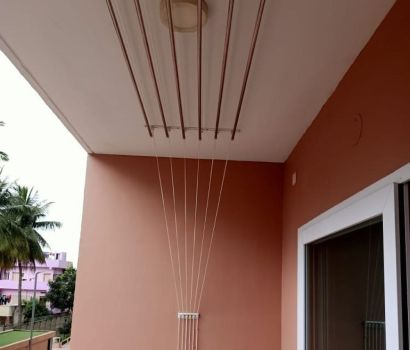
Traditional floor racks take up 10 to 15 square feet of usable balcony or utility floor space. A ceiling hanger utilizes 100% dead vertical space overhead, leaving your balcony floor entirely open for seating, plants, or walking.
Q11: Can a wet cloth ceiling hanger be mounted on false ceilings?
Yes. Installers use extended anchor rods that extend through the false ceiling panel (Gypsum/POP) to secure directly into the main RCC concrete ceiling slab above, ensuring it easily bears the weight of wet clothes.
Q12: How far down do the individual rods lower for loading wet clothes?
The rods lower down to chest or waist level (typically 4 to 5 feet from the ceiling), allowing you to comfortably hang wet laundry without straining your shoulders or needing a stool.
5. Maintenance, Cost & Usage
Q13: How much does a heavy-duty wet cloth drying ceiling hanger cost?
Standard systems (202-Grade SS) cost ₹1,800 – ₹2,500, Heavy-Duty systems (Jindal 304-Grade SS) cost ₹2,800 – ₹4,000, and Motorized systems with built-in drying fans cost ₹10,000 – ₹20,000+.
Q14: Are wet cloth ceiling hangers easy for seniors and children to operate?
Yes. Because each rod operates independently on its own pulley cord, you only lift the weight of one rod's worth of clothes at a time. The dual-pulley gear reduction makes raising heavy wet laundry practically effortless.
Q15: How do I clean and maintain my wet cloth ceiling hanger?
Simply wipe the rods with a microfiber cloth once a month to remove laundry detergent residue or mineral deposits from tap water. Applying a few drops of machine oil to the pulley wheels once a year ensures smooth, whisper-quiet operation.